Heat Pump
Discover the perfect balance of comfort and efficiency with our advanced heat pump systems built using quality HVAC parts. Designed to provide both heating and cooling, our systems deliver consistent performance, lower energy costs, and year-round reliability.
Designing Heat Pump Systems for a Low-Carbon Future
Heat pumps are now in the limelight thanks to their recognition in government-backed schemes such as the Green Homes Grant and the Renewable Heat Incentive. With zero emissions at point of use, there is no doubt that they are perfectly placed to help drive down carbon emissions from domestic heating. However, it is essential to design a heating system with ground and air-source heat pumps correctly to enable them to deliver the carbon and energy savings promised. What’s more, it is important to understand how these systems can be taken one step further so that their carbon-reduction potential can be maximised for future residential developments.
Size matters
Many crucial aspects of heat pump design are related to the low and medium flow temperatures of these systems, such as sizing and controls. Unlike traditional solutions which operate at anywhere between 60 to 85 degrees, any flaws in the design of a heat pump system will result in more noticeable consequences, such as higher electricity bills and lower levels of comfort.
This is why extra attention is needed when calculating pipe sizing and flow rates. Lower flow temperatures and lower temperature differentials for heat pump heating systems mean that more water going through the pipes is needed to ensure sufficient heat transfer. Correctly calculating the system will ensure that the pipework and heat emitters such as radiators will be appropriately sized so that a space is warmed to the desired temperature.
A balancing act
Because water takes the path of least resistance, it wants to flow to the first radiator rather than the last in the hydraulic circuit. This is why it is crucial to perform hydraulic balancing correctly at commissioning so that all heat emitters in a property receive the required amount of heat, including the last.
Unbalanced systems can lead to higher system return water temperatures, reducing the heating system’s operational efficiency and impacting the customer’s comfort.
In essence, hydraulic balancing ensures the flow of water is balanced across all radiators in the system, so that each one receives the right amount of water and therefore heat. It is the final piece of the puzzle in delivering a well-designed, installed and commissioned heating system.
Stay in control
With a traditional high-temperature system, the boiler quickly heats a building to the required temperature. Heating solutions designed to run at lower flow temperatures need to be on for longer, which is why setting up the controls correctly is paramount to enabling the system to perform efficiently.
We recommend using ‘comfort’ and ‘setback’ temperatures. The former is usually around 20-21 °C, the latter is for nighttime or when occupants are out of their home or building, at around 16- 17 °C.
Using controls with load or weather compensation will also ensure that a heating system is only on for long enough to maintain the right temperature.
So, if only a small increase in energy is required to reach the set temperature, the heating system will operate at a reduced output to use the minimum energy needed.
More Hot Water
Most heat pumps on the market operate at lower temperatures, which means a back-up heater (a direct electric immersion heater) is required in the hot water cylinder to store hot water above 60 °C – the point at which legionella bacteria are killed. However, the recently launched aroTHERM plus uses natural refrigerants, which can produce higher system temperatures.
This means that the flow temperature into the cylinder, directly from the heat pump, can be up to 75 °C. As a result, the use of a direct electric immersion heater to protect occupants from legionella is not necessary, and users can benefit from a more effective system that delivers more usable hot water at the point of use. This is why extra attention is needed when calculating pipe sizing and flow rates.
Lower flow temperatures and smaller temperature differentials in heat pump heating systems require more water to flow through the pipes to ensure sufficient heat transfer. Correctly calculating the system will ensure that the pipework and heat emitters, such as radiators, are appropriately sized so that the space is warmed to the desired temperature.
Heat networks
In apartment blocks, heat pumps are now commonly used as centralised heat sources within low-temperature district heating networks or ambient loops. A central heat pump supplies heat to a buffer tank, from which individual apartments draw energy through smaller connected heat pumps. This setup improves efficiency, reduces heat loss in common areas, and cuts insulation costs, as heat is only generated where needed.
Future connectivity
Fundamentally, designing and installing a heating system with a heat pump doesn’t differ a great deal from a boiler installation. Everything you should do for the latter – getting flow rates, sizing and water quality right – you have to do with the former. Systems with heat pumps may be less forgiving to faults in their design and installation, but with greater potential to deliver heat with zero emissions at point of use to many more people, they are paving the way towards decarbonising heat in our homes of the future.
Ground Temperatures for Heat Pump Source UK
In the UK, ground temperatures for heat pump sources are typically around 5 °C to 15 °C (41 °F to 59 °F) during the winter months.
This stable temperature range allows for consistent heat extraction, making ground source heat pumps an efficient choice for heating and hot water provision.
The heat pump system works by transferring heat from the stable ground to the home’s heating system, ensuring a reliable, comfortable living environment year-round.
-
Ball Valves
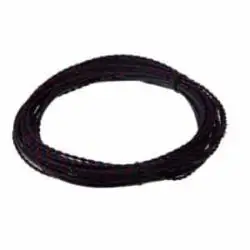
Water Leak Detection Cable Sensor for the WLM4 modules
£42.00 – £67.00Price range: £42.00 through £67.00 Select options This product has multiple variants. The options may be chosen on the product page -
Ball Valves
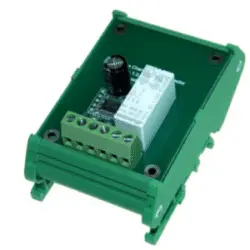
Water Detection Module WL-DT24
£30.00 – £33.00Price range: £30.00 through £33.00 Select options This product has multiple variants. The options may be chosen on the product page