Purification
Improve your indoor air quality with our powerful purification solutions built using quality HVAC parts. Designed to remove dust, allergens, and harmful particles, our systems ensure you and your family breathe cleaner, healthier air every day.
Ventilation
As building owners look for safer ventilation solutions, UVC purification of ducted airflow has gained attention. However, UVC is not a complete solution on its own. When applied at the correct dose, it can play an important role in improving air quality, but it does not address contaminants on surfaces or those emitted by occupants within occupied spaces.
To effectively deactivate airborne microorganisms, in-duct UVC systems must deliver a sufficient intensity and exposure time to ensure high efficiency. The design of such systems depends on several factors, including airflow, duct size, air temperature, and duct material. Without considering these parameters, choosing a UVC unit is largely speculative. Therefore, specifying in-duct UVC equipment requires detailed calculations, similar to sizing thermal coils.
Selecting the right UVC system also relies on understanding the target microorganism and modelling its deactivation efficiency mathematically. Extensive data exists on the UVC doses required to neutralise various microorganisms. This means that a system designed to deactivate SARS-CoV-2 by 99.9% will also impact other airborne pathogens to varying degrees, since UVC light inactivates all microorganisms to some extent.
Use of UV
Amongst all the reams of hastily compiled guidelines issued by various sectors about adapting ventilation systems to enable the return to work, in-duct UVC air purification gets the occasional mention. Whilst this is encouraging, in-duct UVC should not be seen merely as a quick fix to make workplaces safer from Covid-19.
It is much more than that. In-duct UVC is a long-term investment in the workplace environment that pays back even in non-COVID times by delivering lower absenteeism costs. In that context, the supply of purified air, free of viable SARS-CoV-2, is a short-term bonus.
How UVC Technology Helped Address Sick
Building Syndrome
The recent history of UVC in HVAC systems is interesting. Sick building syndrome was widely discussed in recent decades, with one contributing factor identified as centralised building ventilation systems, particularly the microbial contamination that can accumulate in cooling coils and drip pans.
This was a particular issue in the more southerly states of the USA, where higher ambient humidity and temperatures are typical. Although the cooling coils would be protected by air filters, if contamination originated in the coils, the filter stages upstream of the source would not provide any benefit. UVC was widely marketed as a solution to this problem, and by basking cooling coils in UVC light, microbial growth could be prevented.
A number of academic studies were conducted to quantify the effectiveness of this approach, and there was broad consensus that UVC coil cleaning was both effective at preventing microbial growth on coils and at significantly reducing workplace absenteeism.
One such double blind study by Montreal Chest Institute (part of McGill University in Montreal), which was published by The Lancet, described how basking in cooling coils in UVC reduced bacteria on irradiated surfaces by 99% and for the building occupants, the overall sickness rate was reduced by 20% and respiratory symptoms by 40%.
Whilst the effectiveness of UVC coil cleaners is well understood, it should be remembered that this effect derives from continuous exposure of surfaces, preventing microbial growth and the subsequent entrainment of viable microbial particles from those surfaces to the airflow. It does not follow that a UVC coil cleaner-type fitting will also be equally effective at treating airborne bioaerosols. That 99% figure does not apply to treating airborne micro-organisms.

-
Air
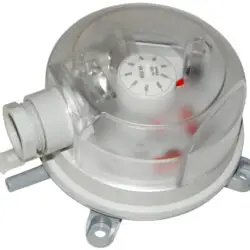
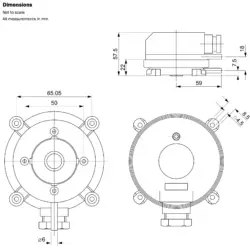
Air Differential Pressure Switch
£17.00 Select options This product has multiple variants. The options may be chosen on the product page -
Air
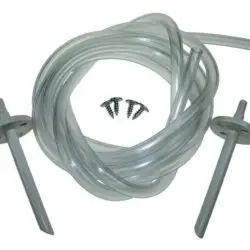
Clear PVC Flexible Hose Pipe 5mm ID – 7mm OD for Pitot Tubes
£0.40 – £99.00Price range: £0.40 through £99.00 Select options This product has multiple variants. The options may be chosen on the product page -
Relay 24Vac Coil
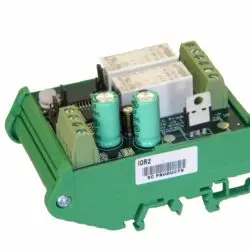
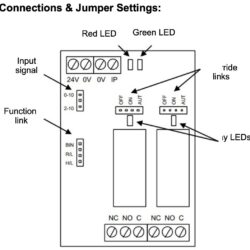
Two Stage Relay Module – IOR2
£39.50Original price was: £39.50.£35.00Current price is: £35.00. Add to basket